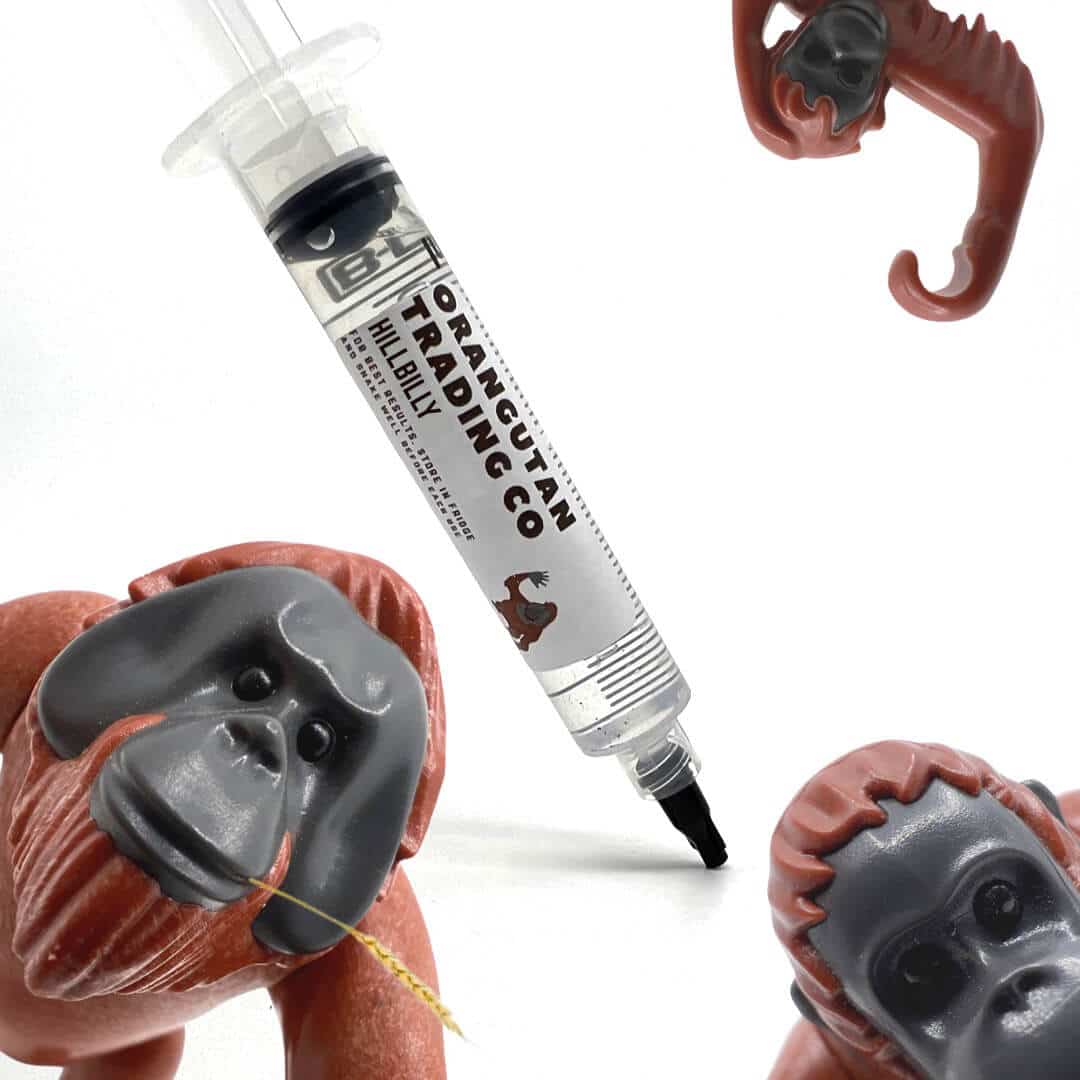
Spore syringes - what are the benefits?

Table of Contents
Hello again! This time I'm gonna do a bit of writing about the pros and cons of using spore syringes instead of any of the other ways that we can store spores, such as swabs, or prints. I'm hoping this'll clear up things for a few people, because I sometimes forget that not everyone's been having mycological fun for years, and things that might seem obvious to me aren't actually that obvious! Brainworms, doing their thing, I suspect. Anyway, let's get into it:
What are spore syringes?
Spore syringes are pretty much the default method of cultivating magic mushrooms (if you live in a country where it's legal to do so), or storing them for the future (if you live somewhere with dumb laws), but why? Easy: mushroom spores are in competition with a whole host of other elements. Bacteria, other fungal spores, and wild yeasts all like the same food sources, and all of these are floating freely in the air (unless you live in a literal laboratory cleanroom).
We need to 1) get the spores off the print so that we can disperse them from their massive clump of millions, and 2) put them into a sealed and sterile environment so that the only possible contamination can be something that came from the spore print. Contaminated prints are startlingly rare, especially given that they're taken from the underside of a mushroom, but it's not impossible for the odd bit of dust to have floated up under the mushroom's gills.
The easiest way to solve these issues is to use a syringe! Medical-grade, sealed individually and pre-sterilised. We then use a medical-grade, sealed and pre-sterilised scalpel that we open in front of the laminar flow unit, and scrape the spores off into a laboratory beaker that we've filled with distilled water (this type of water has almost zero mineral content). We've sterilised the distilled water first by using a pressure cooker. This solves most of our problems in one go, as we've now got a conveniently sized (and clean) container for plenty of spores, and they'll disperse nicely due to the liquid carrier. We then cap it with, you've guessed it, an individually-wrapped pre-sterilised stopper, and package it up with an individually-wrapped pre-sterilised needle so that there's no chance of contamination being added at the stage of squirting the spores out (as long as the end user doesn't contaminate the needle or do everything in the open air).
What you've got there is called a multi-spore syringe, or MSS. It doesn't mean that there's spores from different varieties of mushroom in there, just that there are multiple spores inside the syringe (in the tens of thousands range). This is pretty much your bread-and-butter, in the world of mushroom spores. If you were living in a country where the cultivation of magic mushrooms was legal, you could make liquid culture syringes instead, but because liquid culture is living mycelium, it's illegal in most of the world and so isn't a viable option.
Some mushrooms don't drop much in the way of spores, so you can't really harvest the spores from a print. This means making a spore syringe from them, whilst not technically impossible, isn't really a sensible option as you'd be putting in a mad amount of time, resources, and effort just to make one tiny spore syringe. With these kinds of mushrooms, we use individually-wrapped pre-sterilised swabs, and get the spores straight from the gills. This is far harder to use, as there's a much higher chance of contamination, and trying to get spores off the swab and still have them be near enough to each other to start working their magic is tricky, even for experienced mycologists. Nonetheless, that's the only way to collect the spores, so that's what's done. It's a very flawed method, but it's the only one that works and is legal. Gotta catalogue those genetics somehow, after all!
 I said genetic catalogue not genesis catalogue goddamn it
Advantages of using spore syringes:
The main advantage of spore syringes, compared to our other options (swabs, prints, liquid culture), is that they're legal, they're affordable, and they're reliable. Making spore syringes from spore prints is what I'd definitely call a solved problem. Collectively, mycologists have been using spore syringes for decades now, and as long as the process of adding the spores to the liquid, and then drawing them into the syringes is followed cleanly and efficiently, issues are very rare.
It's also where everyone starts, as buying a spore syringe is the where you've (almost) got to start, unless you're already very experienced with aseptic technique and already own a pressure cooker, which is something that you'll learn along the way if you really get into the hobby. Later on, you'll want to muck around a bit and do your own thing, but you still need a source of genetics, so spore syringes are still useful for lots of advanced mycologists as there's a whole wealth of different mushroom variants already packaged up and ready to go.
Spore prints are super cool if you want to make your own syringes, and you can raise your chances of success a fair bit by using a still air box if you don't have a laminar flow unit. It's not ideal, but as long as you accept that you will have a greater chance of making some dodgy syringes, then it's a very cost effective way of getting a lot of mushroom spores at one time. You wouldn't want to be using a still air box if you were trying to sell the spores as a job, but for your own use I'd consider it a reasonable compromise.
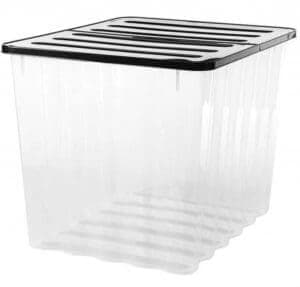 Box. Add holes in the side. Well done you are an engineer now.
Tips for using your spore syringe correctly:
This bit ain't too complicated, but it all comes down to this: be quick, be methodical, be clean. You need to be clean, your area needs to be clean. Yes, you can have successes in a dirty environment, but if you want to maximise your chances, do these things:
- Shower - make sure you are as clean as possible. Skin cells, hair, dust from outside, all these things can muck up your hard work.
- Use a still air box at the very least. I know I keep going on about them, but the improvement you'll get for that tenner you spend can't be beaten by any other tenner. It's a plastic box. Buy the biggest and tallest one you can.
- Have all of your supplies ready, in your still air box, and clean. Spray it down with a little iso if you like, but every time you take your hands out of that box or lift it up to put something in that you've forgotten, you're increasing the chances of contamination. Write a list and get it all in there in one go.
- Shut the doors and windows to minimise the airflow in your room. Small thing to do, but it'll help ya.
- Don't use a lighter in your still air box if you've used any iso in there, because that's a really good way to get yourself a trip to hospital.
- Make sure you wipe down the outside of your syringe (not the needle) with the supplied alcohol wipe. That's what it's for. The outside of the syringe should be considered dirty until you know that it isn't.
- Don't fuck about with the needle! Push it through the packaging without touching the actual needle, then ideally screw it onto the syringe without touching it (use the packaging it's in to help you do this, it's easy). Make sure you've taken the cap off the end of the syringe first too. Once the needle's on and you're ready to go, remove the needle cap.
Now usually someone will read this sort of thing, then email me and say "oh I don't do X or I don't do Y", and it's like, yeah, cool, do whatever you want, by all means, but none of these steps above are complicated, none of them cost you money, and you can massively improve your success rates. I'm a big fan of getting an efficient, methodical system in place, and this is that. It means you can be fast, but still thorough.
 Probably no point trying to do any microscopy in here
Frequently asked questions about spore syringes:
FAQs
Where should I store my spore syringe?
It'll be fine at ambient temperatures for around six months, but if you wanna keep it for longer, get it in the fridge. Just be sure not to let it freeze, and bear in mind it will need cleaning when you take it out of the fridge. It's best to keep it in the supplied bag, just to provide another barrier.
How long will my spore syringe last?
Like it says above, if you leave it at ambient temperatures, the rough guidance is "around six months", but in a fridge it'll potentially last for years. I've had people use some that they bought off me five years ago, and they were fine. It's a perishable product, so if you can use it up within a year, that'd be best.
I can't get the spores to come out of the needle, why is that?
99% of the time, it's because the syringe cap hasn't been removed. Yup, the needle will fit over the syringe cap, but obviously it's a cap. Unscrew it first. It's on the squirty end of the syringe, it's one of two moving parts with the other being the plunger, and it isn't at that end, so that's narrowed it down.
1% of the time it's because the spores have clumped up and are blocking the needle. In your still air box, draw the plunger backwards a bit, then agitate the syringe to break the clump up. Always worth giving the syringe a little shakeup before every use.
Why can I see clumps/not see any clumps?
I've already answered this one, over here! The short version is that it's a totally normal phenomenon called "hydrostatic pressure" and it either happens or it doesn't, it's the whims of the gods.
So yeah, that's why we're all still loving spore syringes - they're the easiest way to get the ball rolling. If you'd like to buy some from me, that would be great, I'm quite fond of being able to afford food and stuff, so give it a whirl!
All the best, take care of each other! OTC